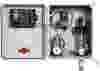

An ethyl mercaptan injection system is a key component in the odorization of natural gas, ensuring that even small leaks can be detected quickly and safely. Ethyl mercaptan is a powerful odorant known for its rotten egg smell, which makes it ideal for alerting people to gas leaks.
These systems are designed to inject precise amounts of odorant into the gas stream, maintaining consistent odor levels across varying flow rates. Used in both LPG and natural gas networks, ethyl mercaptan injection systems help utilities meet safety regulations and exposure limits, while also supporting environmental goals by preventing undetected leaks. Their reliability and ease of integration make them a trusted solution for enhancing gas safety in residential, commercial, and industrial settings.
What Is Ethyl Mercaptan Used For?
Ethyl mercaptan (also known as ethanethiol) is a colorless liquid with a highly distinctive and pungent odor—commonly compared to rotten cabbage or garlic. This compound is primarily used as an odorant in fuel gases such as liquefied petroleum gas (LPG) and sometimes in natural gas, particularly where a strong and immediate odor response is required.
The reason for its widespread use in LPG is simple: LPG is naturally odorless, which presents a serious safety risk in the event of a leak. To mitigate this, ethyl mercaptan is added in very small quantities—typically around 10–50 ppm (parts per million)—to ensure leaks can be quickly detected by smell. Because the human nose can detect ethyl mercaptan at extremely low concentrations (as low as 1 ppm or below), it is very effective as a warning agent.
Outside of fuel odorization, ethyl mercaptan has limited industrial applications. It can act as a chemical intermediate in the production of pesticides, plastic additives, and pharmaceuticals. However, its strong odor and hazardous nature generally limit its use to enclosed or highly controlled environments.
Its defining feature—the foul, sulfurous smell—is exactly what makes it such a life-saving additive in residential, industrial, and commercial fuel storage and distribution systems.
What Is the Mercaptan Dosing System?
A mercaptan dosing system (also known as an odorant injection system) is a precision-engineered piece of equipment designed to inject small, accurate amounts of mercaptan compounds—such as ethyl mercaptan, tetrahydrothiophene (THT), or tert-butyl mercaptan—into fuel gases like natural gas, biogas, or LPG.
The purpose of these systems is to ensure that gas streams are consistently odorized at levels that comply with safety regulations, which vary by region but typically require gas to be detectable by smell at 1/5th of the lower explosive limit (LEL). The dosing system must deliver this odorant proportionally to the gas flow, regardless of flow fluctuations.
Key Components of a Mercaptan Dosing System:
- Storage Tank: Holds the liquid mercaptan compound, often in stainless steel or other corrosion-resistant materials.
- Metering Pump: Precisely controls how much mercaptan is injected into the gas line.
- Flow Signal Input: Reads gas flow rate from the pipeline using flow meters or SCADA input.
- Injection Point: A specialized fitting that introduces mercaptan into the gas stream, typically at the pipeline inlet.
- Control Unit: Often PLC- or microprocessor-based, this unit monitors flow rates, adjusts dosing, and provides alarms for errors or tank levels.
- Safety Features: Leak detection sensors, double containment, and redundant systems are often included due to the flammable and toxic nature of mercaptans.
Systems like those from YZ Systems and our competitors are widely used in the gas industry for this purpose. These dosing systems are critical to public safety, especially in residential gas distribution networks, as they ensure gas leaks can be detected before reaching dangerous concentrations.
What Does Mercaptan Produce When Injected into Natural Gas?
When mercaptan—such as ethyl mercaptan or THT—is injected into natural gas, it doesn’t chemically react or change the properties of the gas in any significant way. Instead, it simply adds a detectable odor to the otherwise odorless gas stream.
Here's what happens:
- The mercaptan vaporizes and mixes uniformly with the flowing natural gas.
- It does not combust or alter the gas’s energy content, BTU value, or flame characteristics.
- Its presence is solely for olfactory detection, meaning its purpose is to activate the human sense of smell.
The goal is not to chemically modify the gas, but to equip it with a sensory warning system. In practice, if a leak occurs downstream, the released gas will carry the mercaptan smell, making it quickly and easily recognizable even by people with no technical training.
It’s important to note that mercaptans are thermally stable and don’t decompose under normal gas distribution conditions. However, over very long distances or through absorption by pipe walls (known as "odor fade"), there can be a reduction in perceived odor—something that gas operators must monitor and compensate for through careful dosing and testing.
What Is the Difference Between Mercaptan and Ethyl Mercaptan?
The term "mercaptan" is a broad category referring to a group of organic compounds that contain a thiol group (–SH) attached to a carbon chain. All mercaptans have a strong odor and are used primarily for gas odorization, though they also serve in other chemical and industrial applications.
On the other hand, ethyl mercaptan is a specific type of mercaptan with the chemical formula C₂H₅SH (or CH₃CH₂SH). It is one of the most commonly used mercaptans, particularly in LPG systems, due to its:
- Low odor threshold (can be detected at <1 ppm)
- Compatibility with gas-phase conditions
- Cost-effectiveness and ease of storage
Summary of Key Differences:
| Feature | Mercaptan (General) | Ethyl Mercaptan (Specific) |
| Definition | Class of sulfur-based odorants | A specific compound (C₂H₅SH) |
| Odor | Varies, generally sulfurous | Rotten cabbage or garlic |
| Applications | Gas odorization, chemical intermediates | Primarily used in LPG systems |
| Detection Threshold | Varies by compound | Extremely low (<1 ppm) |
| Chemical Formula | R–SH (R = any alkyl group) | CH₃CH₂SH |
Other types of mercaptans include tert-butyl mercaptan (TBM), isopropyl mercaptan, and normal-propyl mercaptan, which are often blended to produce an odor profile that is consistent, strong, and instantly recognizable.
In short, ethyl mercaptan is a member of the mercaptan family, and one of the most effective and widely used options in the energy and utility sectors.
The use of ethyl mercaptan and other mercaptans in natural gas and LPG systems is a key safety practice. Without these odorants, gas leaks could go unnoticed until it is too late, which poses serious risks to public safety. Mercaptan dosing systems ensure these odorants are safely added to gas pipelines, using precise instruments and smart controls.
Knowing the difference between general mercaptans and specific ones like ethyl mercaptan helps gas professionals choose the right odorant. This is important for residential heating, industrial furnaces, or LPG cylinders.
It is important to know about mercaptan technology. You should also understand chemical behavior and delivery systems. This applies whether you are building a gas distribution network or maintaining an odorization system. This knowledge helps ensure safety, meet regulations, and build public trust.