The Continued Shift to Renewable and Alternative Energy
The world's energy system continues its long structural shift toward renewable and alternative sources — and the pace has only quickened. Wind and solar are scaling fast, but so is electricity demand, driven by a new and voracious load the last decade didn't anticipate: AI data centers, electrification and reshored manufacturing. In that mix, natural gas has moved from "bridge fuel" to grid workhorse, while its renewable twin — biomethane, or renewable natural gas (RNG) — is emerging as the pathway that lets the existing gas network carry low-carbon molecules. Here's what's shaping the market in 2026 and beyond.
Natural gas is meeting rising, round-the-clock demand
After a decade of flat US power demand, consumption is climbing again — and natural gas is growing with it because it is dispatchable, scalable and affordable. The EIA's 2026 outlook projects US dry gas production reaching a record ~111 Bcf/d in 2026 (up from ~107.7 Bcf/d in 2025), with gas-fired power consumption heading to a record ~38 Bcf/d as data centers demand firm, 24/7 power that renewables alone cannot yet cover.
LNG exports are the fastest-growing source of demand
The demand story is increasingly global. US LNG exports — now the fastest-growing segment of gas demand — are projected to rise from about 15 Bcf/d in 2025 to over 30 Bcf/d by 2050, with export capacity reaching ~27.7 Bcf/d by 2030 as new terminals come online. American LNG has become a cornerstone of global energy security.
Decarbonization: cleaner at the point of use — if leaks are controlled
Natural gas emits roughly 50% less CO₂ than coal per unit of energy when combusted, which is why coal-to-gas switching has been the largest single driver of falling US power-sector CO₂. But gas is mostly methane, and methane is a potent greenhouse gas — so its full climate benefit depends on controlling leaks across the value chain. The industry has made real progress: total US natural-gas-system methane emissions now represent roughly 0.8% of gross gas withdrawals, and distribution-system emissions have fallen even as distribution mains grew more than 50% since 1990. Modernized, lower-emission equipment is a big part of that trend.
The renewable-gas frontier: RNG and biomethane
The clearest expression of the shift is renewable gas. RNG — biomethane produced by upgrading biogas from agricultural manure, food and municipal waste, landfills and wastewater — is chemically interchangeable with fossil natural gas, so it can be injected into the same grid, compressed into Bio-CNG for vehicles, or used on-site. It turns a waste-management problem into a low-carbon energy resource, and it lets utilities decarbonize without rebuilding infrastructure. Policy is accelerating it on both sides of the Atlantic, from the US Renewable Fuel Standard and California LCFS to the EU's REPowerEU biomethane target.
Where odorization fits — and why it matters more than ever
Whether the molecule is fossil natural gas or renewable biomethane, one safety requirement never changes: the gas is naturally odorless, so it must be odorized — dosed with a sulfur-based warning agent such as tetrahydrothiophene (THT) or a mercaptan blend — so leaks are detectable long before they become dangerous. RNG makes this harder, not easier: injection flows are low and highly variable (often 30–5,000 Nm³/h, down to ~10 Nm³/h at commissioning), which demands far more accurate, proportional odorant control than a conventional transmission main.
This is where YZ Systems fits the transition. Its NJEX odorant-injection systems deliver precise, proportional-to-flow odorization across a wide operating range; the LVO (Low Volume Odorizer) is engineered for the very low, variable flows typical of RNG upgrading stations and Bio-CNG mobility; and the ZEO Zero Emission Odorizer delivers all of that with no methane vented during normal operation — so odorization itself stops being an emission source. Paired with Aircom™ / YZ Connect telemetry, operators get remote monitoring, compliance reporting and predictive maintenance across the network.
YZ Systems provides robust odorization systems for RNG
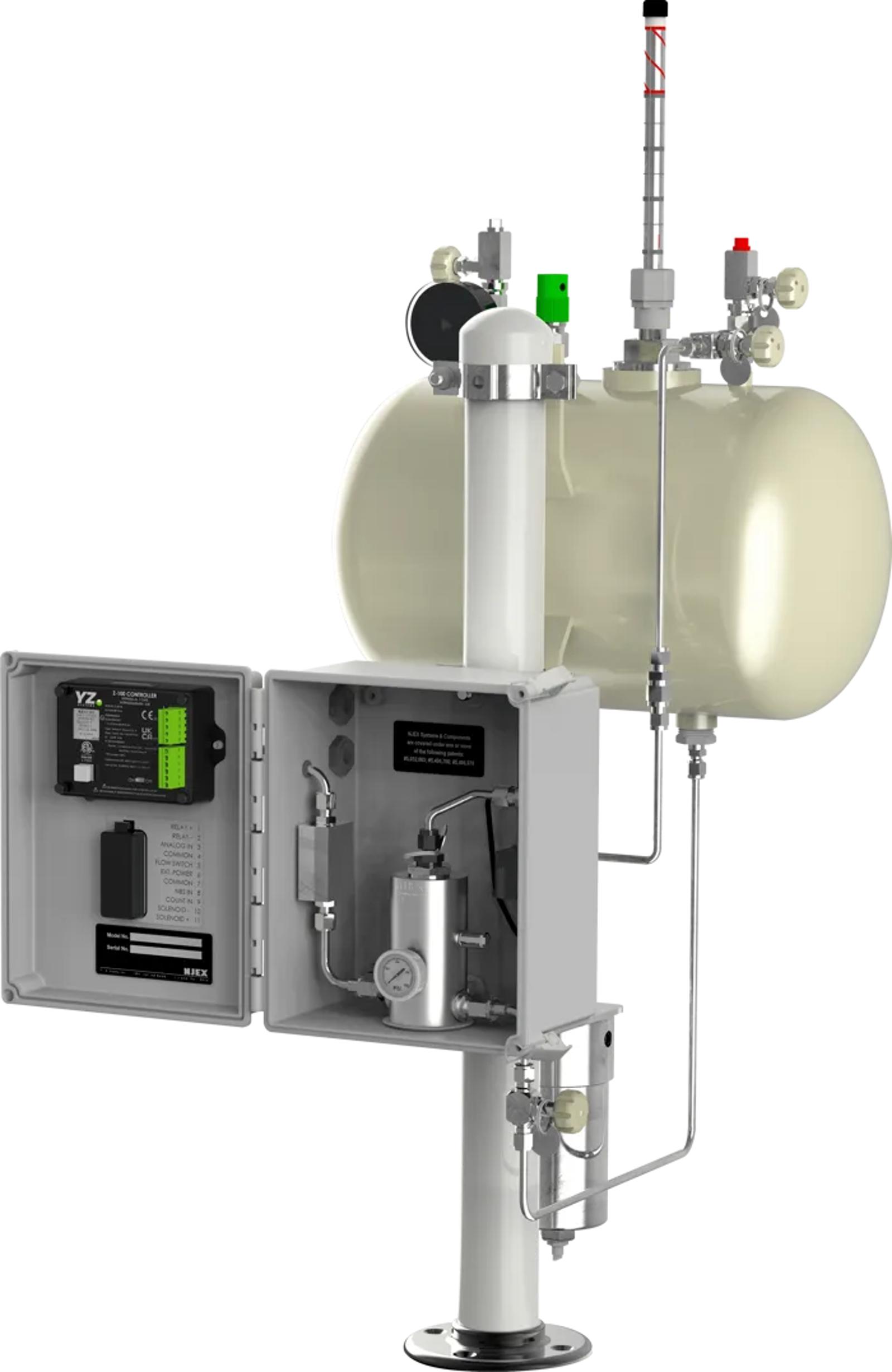
LVO Low Volume Odorizer
- Optimised for extremely low gas flows: down to 10Nm3/hr (6.5scfm) which is critical in RNG / Biomethane applications as gas can be very low flow, particularly upon commissioning. When starting up a gas digester, it starts off low and over time it comes up to full production – the LVO perfect for this.
- The NJEX Low Volume Odorization (LVO) system has been a field proven solution for more than 2 decades in North America.
- The new LVO Z-100 controller adds key features such as flow switch for odorant injection confirmation, alarm or odorant output pulse and audit trail for record keeping.
- The tank is situated above, so naturally creates suction and prevents vapour locking.
- Designed for infrequent strokes.
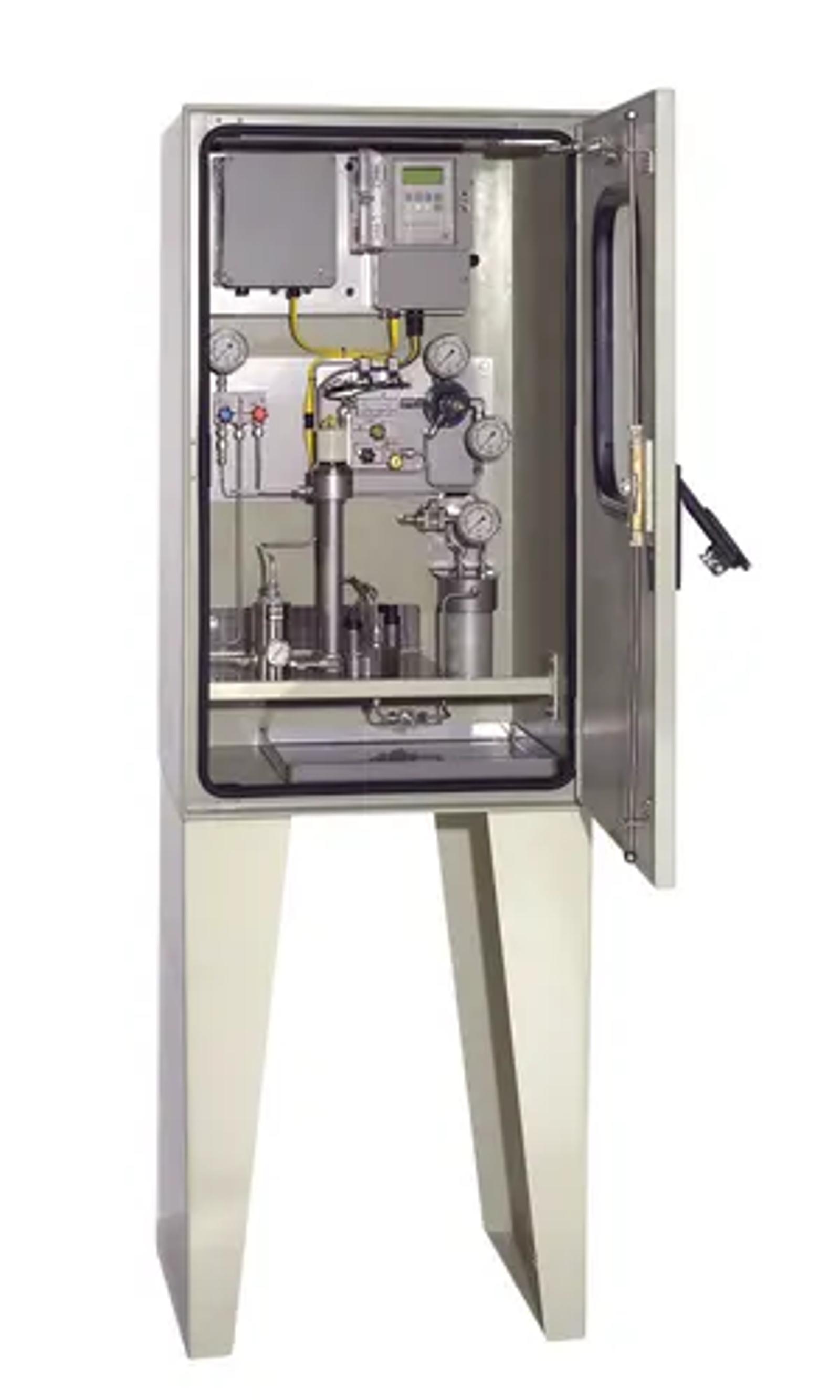
NJEX Odorizer
- Pneumatic operation
- Field-proven as the market leading odorization system in North America.
- Powerful controller to reliably provide proportional-to-flow odorant injection, onboard metering of the odorant injected, system monitoring and alarm notification.
- Additionally the system will document and verify injection rates, performance of each system component, parameter changes and alarms.
- With verometer for pinpoint accuracy: to measure and inject precise amounts of odorant, taking out the guesswork to deliver accurate, reliable odorant injection in any application.
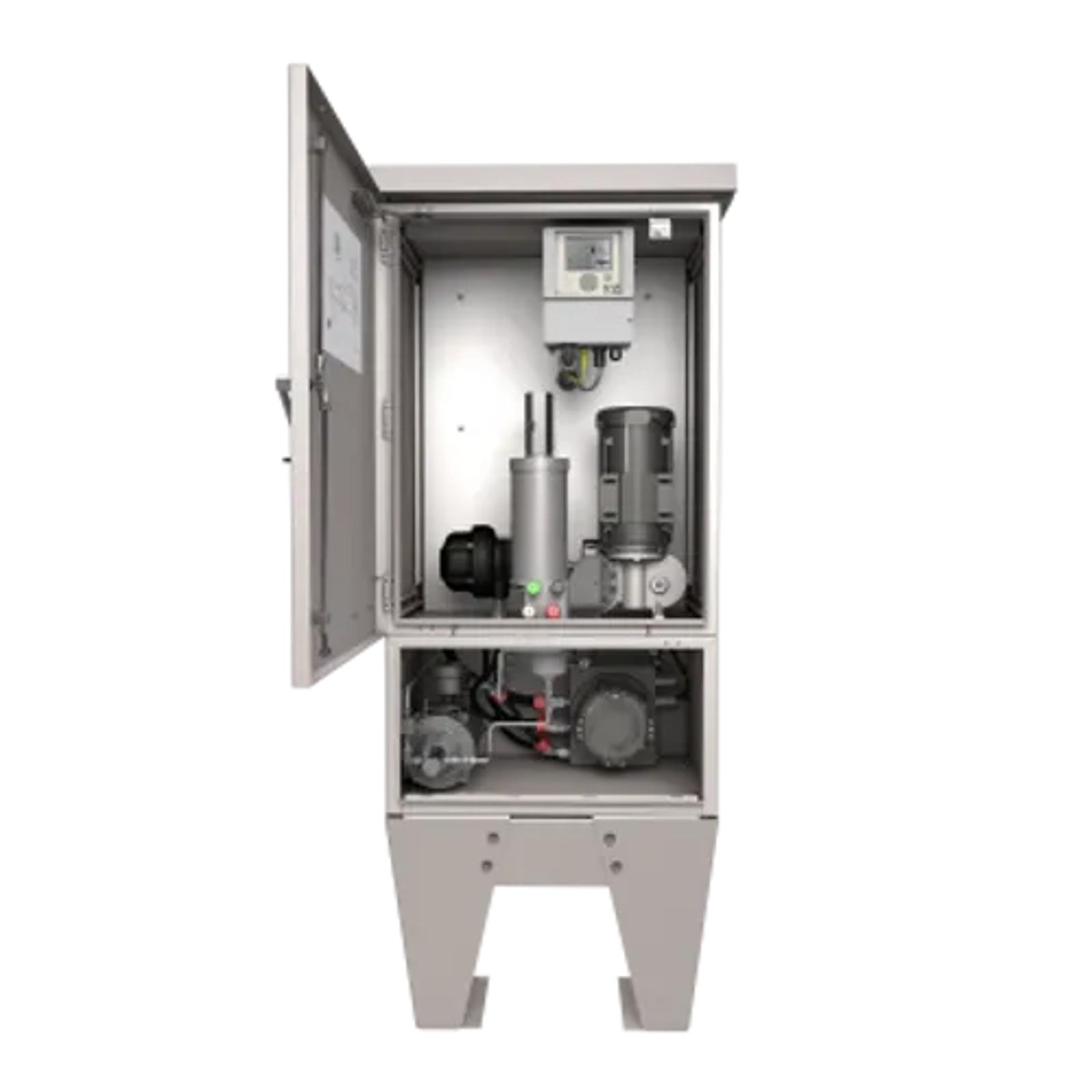
ZEO - Zero Emissions Odorizer
- No methane emissions
- Proven electric pump technology delivers reliability and peace of mind
- With verometer for pinpoint accuracy: to measure and inject precise amounts of odorant, taking out the guesswork to deliver accurate, reliable odorant injection in any application.
- Newest controller with biggest display and plenty of easy-to-use features.